What is Property Management Automation?
Property management automation uses software to handle routine, time-consuming tasks, such as rent collection, maintenance requests, and tenant communications, without direct human intervention. By implementing automated tools, managers can reduce workloads by 50-80%, minimize human error, and enhance the resident experience.
AI is transforming property management automation by enabling systems to learn, adapt, and make decisions without explicit programming. Unlike rule-based automation, AI can analyze large volumes of data, such as payment behavior, maintenance history, or market trends, to generate predictive insights and automate complex tasks. For example, AI can identify high-risk tenants during screening, optimize rent pricing in real time, or prioritize urgent maintenance issues before they escalate.
Key areas for automation include:
Intelligent rent collection: Automates payment reminders, late fee enforcement, and reconciliations. Tenants can pay via multiple channels, while systems track delinquencies and provide real-time financial reporting to reduce late payments and manual accounting work.
Maintenance management: Uses AI and automation to detect, prioritize, and schedule maintenance tasks. Predictive systems identify issues before failure, auto-assign vendors, and update tenants throughout the process, improving response times and minimizing downtime.
Smart tenant screening and leasing: Automates background checks, credit screening, and leasing workflows. AI models assess tenant risk based on financial and behavioral data, while digital tools manage applications, approvals, and lease execution, speeding up move-ins and reducing vacancy time.
Dynamic pricing optimization: AI algorithms adjust rental rates based on market conditions, occupancy trends, seasonal demand, and unit features. This ensures competitive pricing and maximizes revenue without manual market analysis.
Tenant communication automation: Implements AI chatbots, auto-responders, and notification systems to manage routine tenant inquiries, send updates, and route service requests. Supports multi-channel communication (email, SMS, apps) for round-the-clock engagement without staff intervention.
This is part of a series of articles about Property Management Software.
Generate your first rent roll in minutes with AI
The Business Case: Why Property Management Automation Delivers Exceptional ROI
Cost Reduction and Efficiency Gains
By streamlining operations and minimizing manual work, companies significantly reduce operating expenses. According to McKinsey’s research on real estate transformation, property managers implementing automation report:
15-20 hours saved weekly on administrative tasks
$2,000+ monthly savings in labor costs
90% reduction in payment disputes
70% faster maintenance response times
Revenue Enhancement
Automation directly impacts the bottom line through multiple revenue streams:
20% reduction in late payments, boosting overall revenue
15% increase in net operating income through improved collection rates
Dynamic pricing optimization maximizing rental income based on market conditions
Reduced vacancy rates through automated marketing and tenant screening
Scalability Without Proportional Cost Increases
Perhaps the most compelling benefit is the ability to grow your portfolio without proportionally increasing staff. Automation supports growth by enabling property managers to handle larger portfolios without hiring additional staff.
Key Areas for Property Management Automation Implementation
1. Intelligent Rent Collection and Financial Management
Modern automated property management systems revolutionize rent collection through:
Automated payment reminders reducing late payments
Multiple online payment options improving tenant convenience
Real-time financial reporting for instant insights
Automated reconciliation eliminating manual bookkeeping errors
2. AI-Powered Maintenance Management
Predictive maintenance systems represent a significant advancement in property management, leveraging the power of AI to anticipate and address maintenance needs before they escalate into costly problems. Benefits include:
Predictive analytics identifying issues before they become emergencies
Automated vendor scheduling streamlining repair coordination
Cost tracking for budget optimization
Tenant satisfaction through faster response times
For more insights on this topic, check out our comprehensive guide on predictive maintenance in commercial real estate.
3. Smart Tenant Screening and Leasing
Automation transforms the leasing process through:
AI-enhanced tenant screening reducing risk and improving selection
Automated application processing speeding up approvals
Digital lease signing eliminating paperwork
Background check automation ensuring compliance
According to a JLL Global Real Estate Technology Survey, 73% of property managers report improved tenant quality through automated screening processes.
4. Dynamic Pricing Optimization
AI-powered dynamic pricing systems act as virtual revenue managers, analyzing:
Market rental rates across platforms
Local vacancy trends
Property attributes and amenities
Seasonal demand patterns
5. Tenant Communication Automation
Intelligent Virtual Property Assistants (IVPAs) are transforming how property managers interact with tenants and owners, leveraging AI to automate and streamline communications. Features include:
24/7 chatbot support for common inquiries
Automated maintenance request routing
Personalized tenant communications
Multi-channel engagement (email, SMS, app notifications)
6. Automated Compliance and Document Management
Regulatory compliance is a major challenge in property management, especially across jurisdictions. Automation tools help mitigate risk by:
Tracking legal and regulatory deadlines (e.g., inspections, licensing)
Auto-generating and storing lease agreements and notices
Managing document versioning and audit trails
Ensuring data privacy compliance through access controls
7. Vacancy and Turnover Workflow Automation
Automating turnover processes reduces downtime and operational friction. Key automations include:
Trigger-based cleaning and maintenance scheduling upon move-out
Automatic listing generation on multiple rental platforms
Digital move-in/move-out checklists for consistency
Real-time vacancy tracking across portfolios
8. Portfolio Performance Analytics
Automated analytics dashboards consolidate data from multiple properties, offering:
Centralized KPIs such as occupancy, arrears, and NOI
Trend analysis to detect underperforming assets
Automated alerts for anomalies or deviations
Customizable reporting for investors and stakeholders
Notable Property Management Automation Tools
1. Kolena

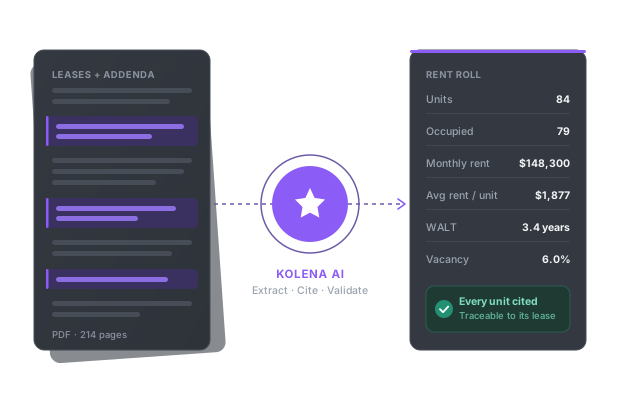
Kolena turns document workflows into automated operations. Use AI to automatically review, validate, generate, and act on claims, leases, rent rolls, and more.
Key features include:
Document Understanding: Parse data from any file — PDFs, spreadsheets, emails, scans, or audio. Kolena automatically detects document types and extracts the details you need.
AI-Powered Data Analysis: Apply business rules and cross-checks to validate every field. Every result includes reasoning, confidence scores, and citations for transparency.
Reporting & Integrations: Generate structured outputs and push results into your existing systems. Export to Word, Excel, CRMs, or Sharepoint seamlessly.
Transparent Reasoning: Kolena doesn't just give results — it shows its reasoning. Every extraction and insight includes clear explanations and citations you can verify.
Pre-built AI Workflows: Get started fast with pre-built automations for real estate, insurance, banking, and finance — easily tailored to your policy, compliance, data, and reporting requirements.
Prompt Optimization: Kolena automatically re-writes and optimizes your prompts for clarity and accuracy — so every user gets expert-level results without the learning curve.
2. TenantCloud

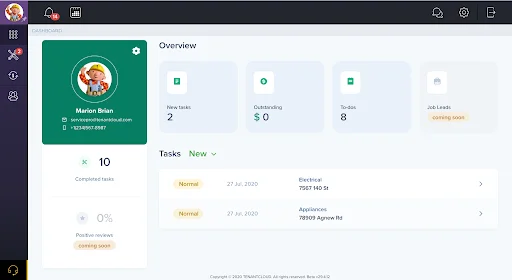
TenantCloud is a cloud-based platform designed to simplify property management tasks for landlords and managers. It combines rent collection, tenant screening, accounting, and vacancy marketing into one centralized system, enabling users to manage portfolios of any size more efficiently.
Key features include:
Flexible Rent Collection: Supports multiple payment methods including credit, debit, ACH, cash, and checks. Autopay helps reduce late payments by up to 90%, while automated invoice tracking ensures accurate records.
Automated Tenant Screening: Streamlines the leasing process with fast, accurate background and credit checks. Landlords can set pre-screening questions, collect application fees, and choose from different screening packages.
Advanced Accounting Tools: Offers real-time financial reporting, custom report generation, and seamless integration with QuickBooks. Users report saving 20 hours per week on financial admin.
Listing Syndication and Vacancy Management: Enables users to publish listings across major platforms like Apartments.com, Realtor.com, and Rentler. A free custom website helps attract applicants, averaging nearly four applications per listing.
Third-Party Integrations: Connects with over 10 external services including Stripe, Google Calendar, and RentRange for extended functionality.
Source: Tenant Cloud
3. AppFolio Property Manager

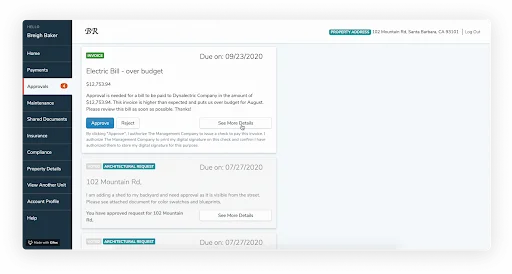
AppFolio Property Manager is a performance-focused platform that moves beyond traditional property management software by integrating automation, agentic AI, and unified data systems. Designed to scale with growing portfolios, it empowers teams to operate efficiently while delivering measurable outcomes for residents, clients, and investors.
Key features include:
Agentic AI for Workflow Automation: AppFolio’s built-in AI automated repetitive tasks and standardizing workflows. This helps teams maintain high performance while reducing manual workload.
Unified Platform Experience: All core functions, accounting, leasing, maintenance, communication, operate within a centralized system. This eliminates silos and allows for data-driven decisions across the portfolio.
Scalable Growth Support: Proven capability to scale operations significantly without proportional increases in staff. For example, operators report scaling from 400 to 14,000+ units with AppFolio's support.
Revenue-Generating Services: The platform offers built-in tools to unlock new top-line revenue, such as resident service add-ons and investor-focused features, aligning financial growth with operational efficiency.
Real Estate Performance Management (REPM): AppFolio introduces a new operational methodology focused on proactive performance management rather than reactive problem-solving, enabling organizations to shape long-term success.
Source: AppFolio
4. TurboTenant

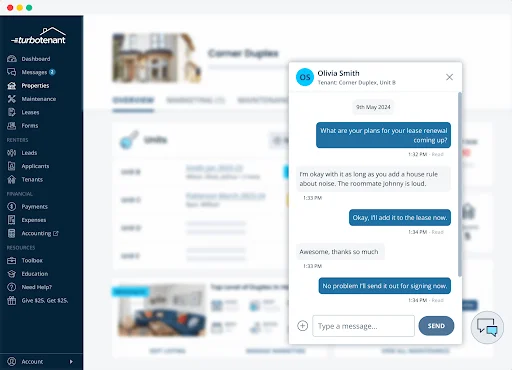
TurboTenant is a free, all-in-one rental management platform designed for independent landlords and small portfolio owners. It simplifies key property management tasks like tenant screening, leasing, rent collection, and accounting—all without upfront costs.
Key features include:
Tenant Lead Generation and Marketing
TurboTenant enables landlords to publish listings across multiple rental sites with a single click. On average, landlords receive 28 leads per listing, significantly reducing vacancy times.Automated Tenant Screening
Offers comprehensive screening reports including credit, criminal, and eviction history. The entire process is automated, with zero cost to landlords, improving tenant quality and reducing the risk of future issues.Digital Lease Creation and Signing
Provides state-specific lease templates that can be customized and signed electronically. This eliminates the need for legal assistance or manual paperwork, ensuring compliance and faster move-ins.Online Rent Collection
Rent payments are streamlined with autopay, late fee customization, and automated reminders. TurboTenant connects easily to bank accounts, offering a professional and trackable alternative to peer-to-peer payment apps.Integrated Accounting and Tax Reporting
Tracks income and expenses automatically and generates tax-ready reports, including Schedule E. A lightweight yet effective alternative to spreadsheets or accounting software like QuickBooks.
Source: TurboTenant
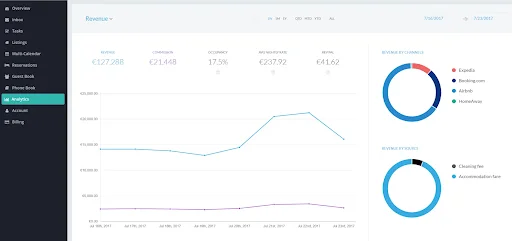
5. Guesty

Guesty is an enterprise-grade property management platform designed to automate, consolidate, and scale short-term and vacation rental businesses. Built with modular tools and deep customization, it supports complex operations while delivering consistent guest and owner experiences.
Key features include:
End-to-End Operational Automation
Guesty automates guest messaging, task assignment, check-in workflows, and more. Features like ReplyAI™, Unified Inbox, and Task Automations reduce manual workload across every stage of the guest journey.Multi-Channel Distribution Management
Centralizes listings across major OTAs and direct booking channels, enabling real-time updates and improved visibility. Guesty’s preferred partner status with top OTAs enhances search rankings and booking potential.Revenue and Occupancy Optimization
Integrated revenue management tools and dynamic pricing help maximize income and occupancy. Guesty users report up to +33% revenue per listing and +22% occupancy growth in the first year.Owner and Financial Reporting
Offers detailed accounting tools, custom financial reports, and owner dashboards for transparency and trust. Supports mid- and long-term stay accounting with nightly/monthly revenue recognition.Custom Website and Branding Tools
Allows creation of branded, customizable booking websites to drive direct reservations and boost brand recognition across property types—from aparthotels to guesthouses.
Source: Guesty
Learn more about agentic property ai.
Choosing the Right Property Management Automation Software
Essential Features to Consider
When evaluating property management automation tools, prioritize:
Integration Capabilities: Ensure compatibility with existing systems
User-Friendly Interface: Intuitive design for quick adoption
Mobile Functionality: Full-featured mobile apps for on-the-go management
Security Features: Bank-grade encryption and data protection
Scalability: Ability to grow with your portfolio
Implementation Strategy: Making Automation Work for Your Business
Define Clear Automation Objectives and KPIs
Start by identifying which operational bottlenecks you want to eliminate. Common targets include rent collection delays, maintenance backlogs, or leasing inefficiencies. Avoid vague goals like “improve efficiency.” Instead, define specific outcomes tied to revenue, cost, or tenant experience.
Translate these into measurable KPIs such as reduction in late payments, faster ticket resolution times, lower cost per unit managed, or improved occupancy rates. Clear metrics make it easier to justify investment and evaluate success.
Also define baseline performance before implementing automation. Without a benchmark, it is difficult to quantify impact or ROI after deployment.
Audit Existing Workflows and Data Infrastructure
Map current processes step by step to identify redundant tasks, manual handoffs, and delays. Focus on where human intervention is required and where errors typically occur. These are the best candidates for automation.
At the same time, assess how data flows between systems such as accounting, CRM, leasing platforms, and maintenance tools. Many property teams operate with disconnected systems, which limits automation potential.
Evaluate data quality, consistency, and structure. AI systems rely on historical data to make decisions. Missing, inconsistent, or duplicated data will reduce accuracy and lead to poor automation outcomes.
Select Tools That Integrate With Your Stack
Choose platforms that work with your existing systems rather than replacing everything at once. Integration reduces disruption and allows you to build on current workflows.
Look for tools with open APIs, native integrations, and strong ecosystem support. For example, your property management system should connect with accounting software, payment processors, and listing platforms without manual intervention.
Poor integration leads to data silos and duplicate work, which undermines the benefits of automation. A well-integrated stack enables end-to-end automation and consistent data across the organization.
Standardize and Automate Core Workflows
Automation requires consistency. If each property or team follows a different process, it becomes difficult to implement scalable automation. Standardize workflows before automating them.
Define clear rules for processes such as lease approvals, maintenance categorization, escalation paths, and tenant communication templates. This ensures predictable inputs for automation systems.
Once standardized, implement rule-based automation to handle repetitive tasks. This creates a stable foundation for introducing AI-driven capabilities later.
Train Teams and Redesign Roles
Automation changes how teams operate. Property managers shift from executing tasks to supervising systems and handling exceptions. This requires new skills and workflows.
Provide hands-on training for all tools and dashboards. Ensure teams understand not just how to use the systems, but also how automation decisions are made. This builds trust and improves adoption.
Redesign roles to focus on higher-value activities such as tenant relationships, portfolio strategy, and performance optimization. Without this shift, automation benefits will be limited.
Monitor Performance and Continuously Optimize
Automation is not a one-time implementation. Track performance continuously using dashboards and reporting tools. Compare results against the KPIs defined at the start.
Identify gaps such as workflows that still require manual intervention, or areas where automation is underperforming. Use these insights to refine rules, update configurations, or retrain AI models.
As your portfolio grows or market conditions change, revisit automation strategies. Systems must evolve alongside business needs to maintain efficiency and ROI.
Future Trends in Property Management Automation
AI and Machine Learning Evolution
The overall revenue of the property management tech market is projected to increase from $3 billion to $5.5 billion in the coming eight years, according to PwC’s Emerging Trends in Real Estate report, driven by:
Advanced predictive analytics
Natural language processing for better tenant interactions
Computer vision for property inspections
Behavioral analysis for tenant retention
Sustainability Integration
Automation increasingly focuses on:
Energy optimization through smart systems
Waste reduction monitoring
Carbon footprint tracking
Green building certifications management
Blockchain and Smart Contracts
Smart contracts, which are self-executing agreements with terms encoded in code, are a key application of blockchain in property management, enabling:
Automated lease execution
Transparent transaction records
Reduced fraud risk
Simplified compliance
Measuring Success: KPIs for Property Management Automation
Track these metrics to ensure automation delivers promised benefits:
Time Savings: Hours reduced on administrative tasks
Cost Reduction: Monthly operational expense decreases
Revenue Growth: Increases in NOI and collection rates
Tenant Satisfaction: NPS scores and retention rates
Portfolio Growth: Properties managed per employee
Conclusion: The Automation Imperative
Property management automation isn’t just about technology—it’s about transformation. Companies have to strike a balance between technology and the human touch to differentiate them from their competitors, using automation to enhance rather than replace personal service.
The data is clear: property managers embracing automation see significant improvements in efficiency, profitability, and scalability. With the right strategy and tools, automation becomes your competitive advantage in the evolving real estate landscape.
Ready to transform your property management business? Start by identifying your biggest operational challenges and exploring how automation can solve them. The future of property management is automated, efficient, and profitable—and it’s available today.